
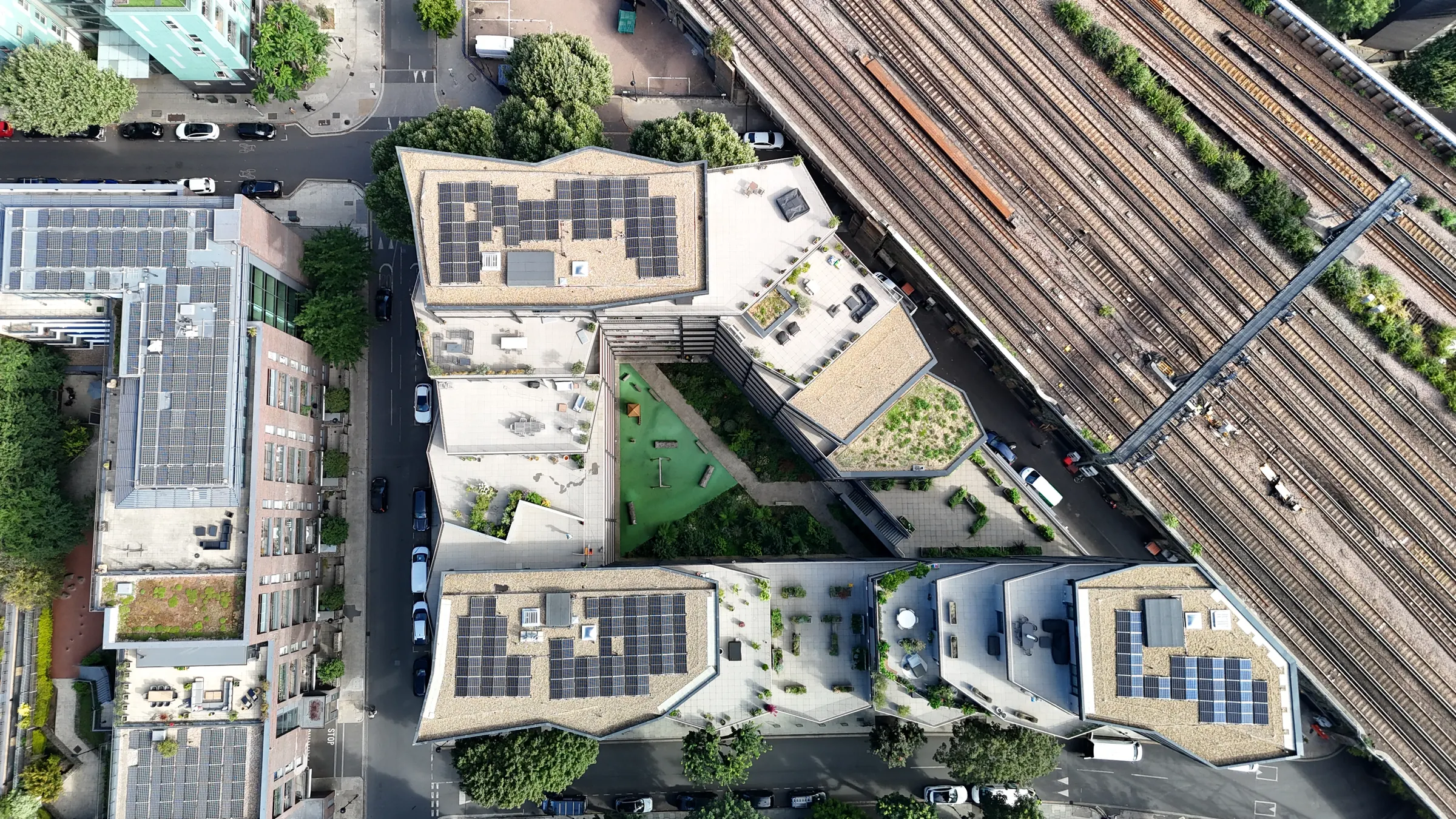
Smart roof monitoring · Leak detection · Design review
Stop hoping the roof is watertight. Start knowing it is.
Vector builds smart roof monitoring into new roofs, retrofits sensors into existing ones, and finds the leaks in roofs that are already failing. Independent of every membrane manufacturer.
Get your free design reviewTrusted by leading contractors and developers
Start where you are
A roof only tells you it is leaking once the damage is done.
Smart roof monitoring changes that. Moisture sensors sit in the roof build-up, under the waterproofing, and report continuously — so water reaching the deck shows up within hours and is narrowed to a zone, rather than being found months later as a stain on a ceiling.
Vector designs those systems into new roofs, retrofits them into existing ones, and investigates roofs that are already leaking. We specify no membranes and sell no waterproofing, so the advice is only ever about the building. Pick the one that sounds like your situation.
Find the leak — leak detection and surveys
Water is coming in now. We locate the breach electronically, without stripping the roof back — one survey, one report and a tightly localised area for targeted repair. Then we tell you what it will take to fix it.
Learn more →Keep it dry — smart roof monitoring
The roof is sound and has to stay that way. Permanent sensors in the build-up, monitored continuously, on new build or retrofit. Ideal for green roofs, podium decks, CLT and data centres.
Learn more →Check the design — waterproofing design review
It is still a drawing. Independent review of the specification, the details and the sensor layout at RIBA Stage 3 — before systems are locked in and mistakes get expensive.
Learn more →Also specialists in buried leak location, geomembrane leak detection and CLT moisture monitoring.
Free for new clients
Send us the roof. We will tell you what we see.
A drawing, a sensor layout, or a photograph of the stain on the ceiling. An independent waterproofing specialist reviews it and comes back — normally within one working day. No charge, no obligation.
How we work
Design it. Commission it. Never stop watching it.
Vector works alongside the design team to provide something that is usually fragmented across the project team:
a roof one party is accountable for. We check the waterproofing design, develop the sensor design against it,
own the quality assurance while the system is laid, and commission the sensors before the roof closes. Then
we stay — running the twice-yearly inspections, autumn and spring, that BS 6229:2025 sets out BS 6229:2025 · Clause 8.2 Inspections A flat roof should be inspected at least twice yearly
In autumn once leaves have fallen, to verify the roof is clear and free-draining and that outlets are not blocked; and in spring, to find and rectify weather damage. Green, blue and other specialist roofs are treated separately - they should be inspected in accordance with the designer’s original inspection plan. The clause then lists what an inspection covers, from ceilings and soffits through to rooftop installation mountings. Extract quoted from BS 6229:2025, © BSI. Summary is Vector’s own wording. Checked against the published standard on 2026-09-11.
and that help demonstrate compliance with manufacturer inspection and maintenance requirements where these
form part of guarantee conditions, and watching the live data for as long as you want us there.
Few organisations bring all four together in one service. The waterproofing designer does not do sensors. The sensor supplier does not review waterproofing design. The installer signs off their own work.
- 01
Design
Two disciplines, one team. Waterproofing design and leak detection are almost never found in the same consultancy.
We read the waterproofing design as waterproofing consultants first — falls, laps, upstands, terminations, the details where roofs actually fail — and only then design the sensor array to suit that build-up and that risk. A supplier will sell you a grid. We give you a layout that reflects where this roof is likely to leak, what sits underneath it, and what the client cannot afford to lose. You leave Stage 3 confident the roof design is sound, and confident it will tell you if it ever stops being sound.
Waterproofing design review · Designing for sensor-based leak detection
- 02
Commission and certify
Commissioning the sensors is the easy half. The valuable half is an independent eye on the waterproofing while it is going down.
Most waterproofing is inspected by the people who installed it. We are a third party with no interest in the system being signed off — and because we will be the ones monitoring this roof for years afterwards, every defect we let through is a defect we have to deal with later. That is a rare alignment of interest on a construction site. We QA the membrane as it is laid, test every sensor while it is still reachable, and issue a commissioning certificate recording that the array responded on the day the roof closed. It is the verification ASTM D8551 describes, carried out by someone with something to lose.
- 03
Monitor, manage, maintain
The roof reports for itself. Someone still has to be reading it in year seven.
Sensors report continuously to a portal. Vector watches it, attends site through the year, and reports on a fixed cadence — so a change in the data becomes a phone call, not a notification nobody opened. Service levels run from self-serve, where your team holds the portal and we are on call, through to Vector carrying the risk outright.
Most clients reach us at stage two or three. Stage one is cheaper — and it is the only stage where the answer can still be “change the design”.
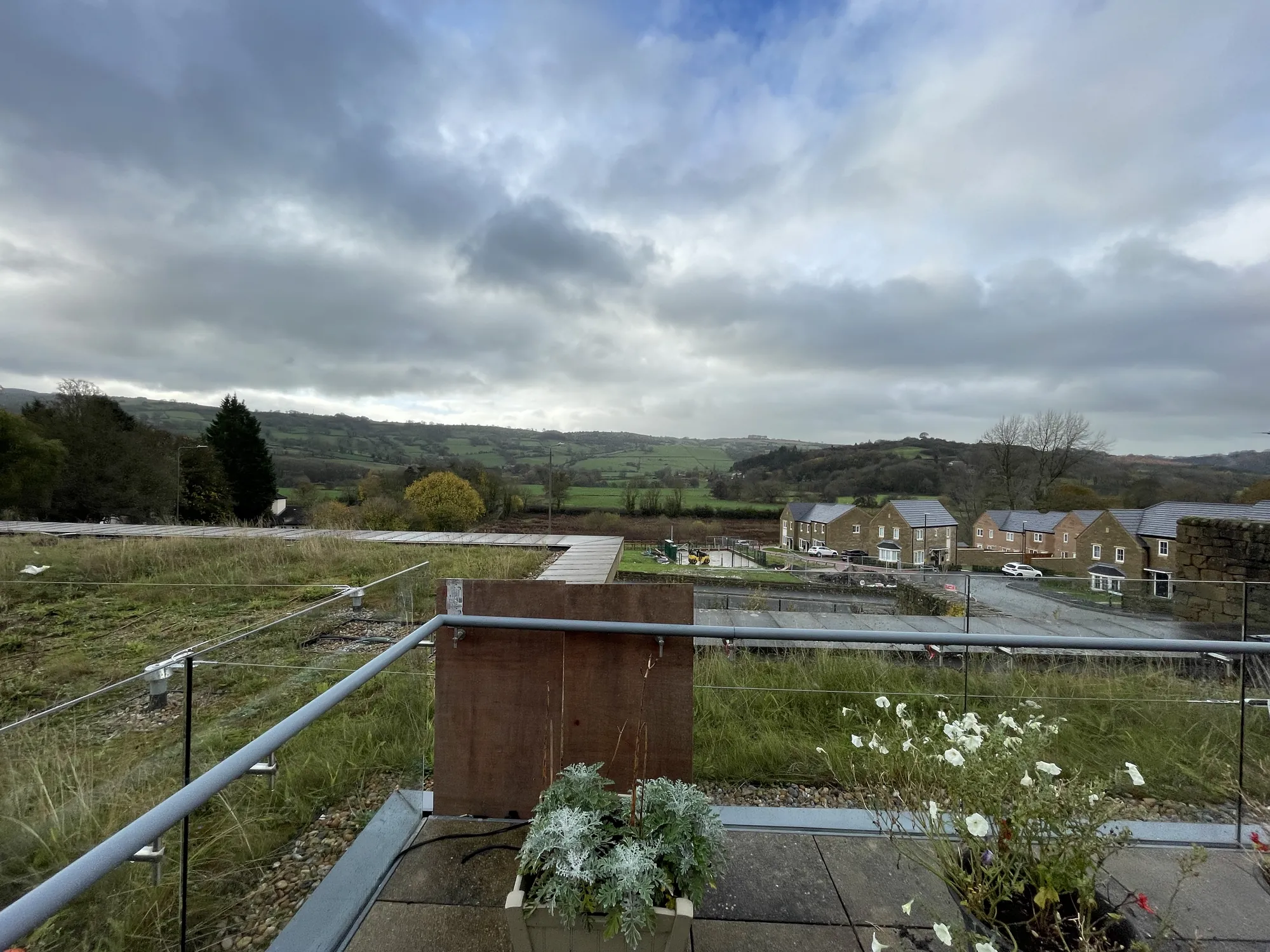
A Balfour Beatty project
“Their approach accurately identified numerous leak locations, allowing us to resolve the issues with precision and minimal disruption — much to the relief of both the client and residents. I would highly recommend Vector for similar challenges.”
Recent work
Real sensor installations.
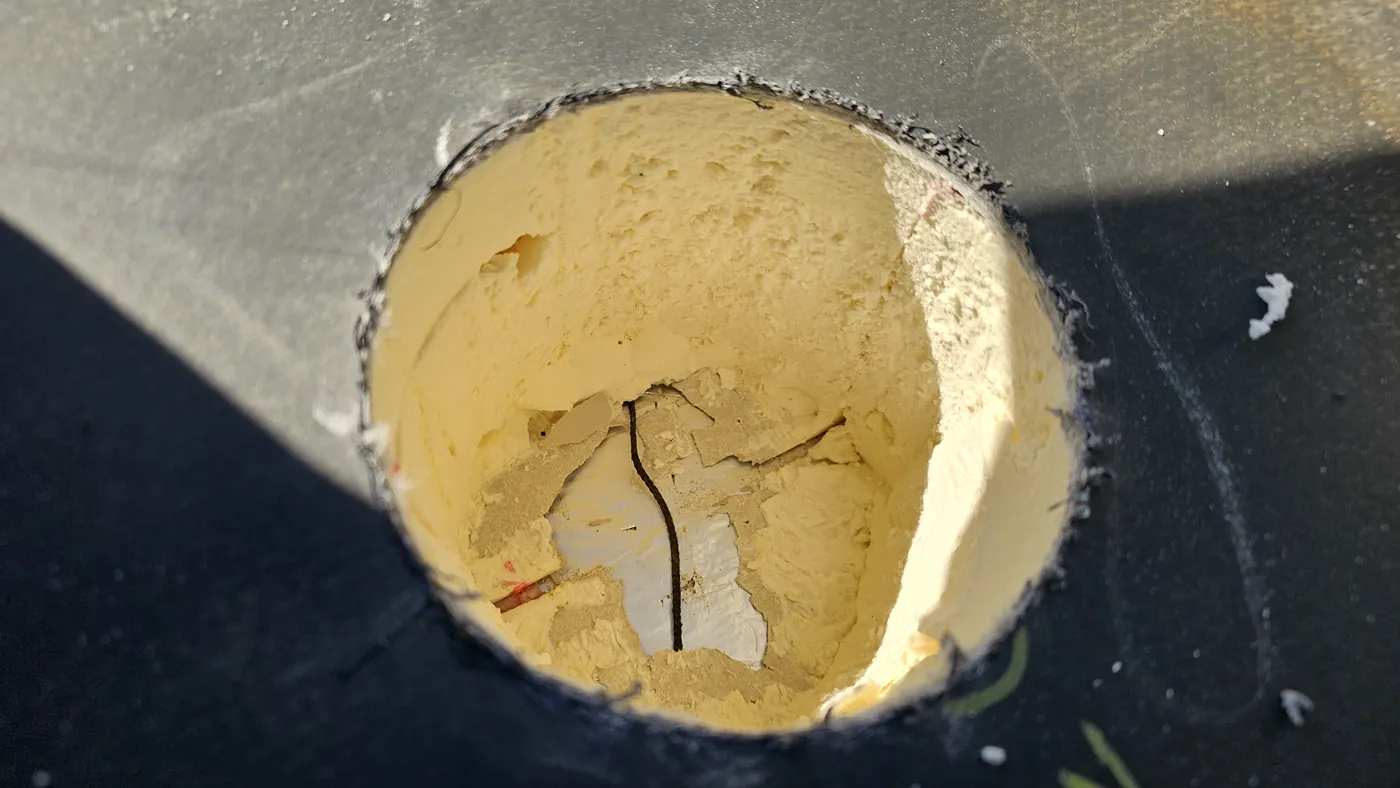
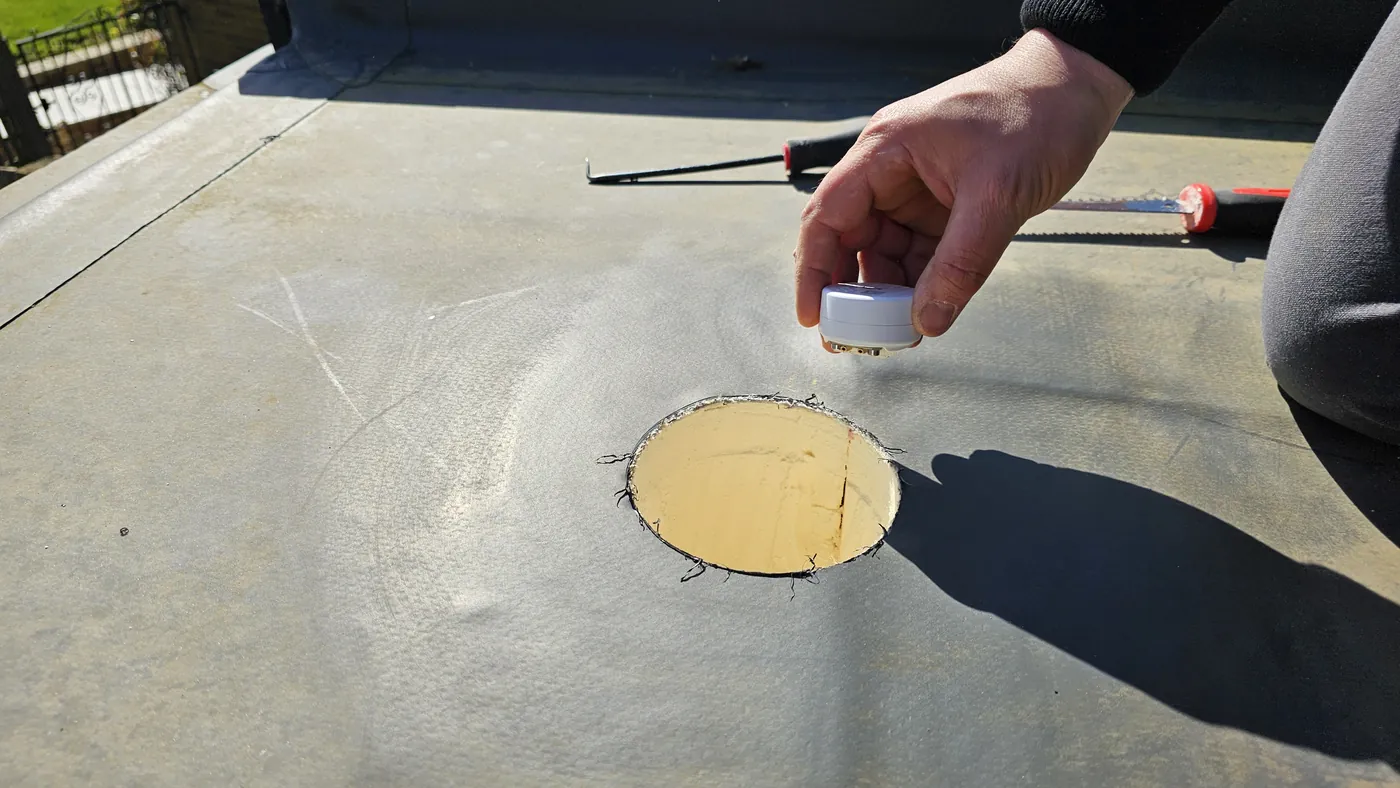
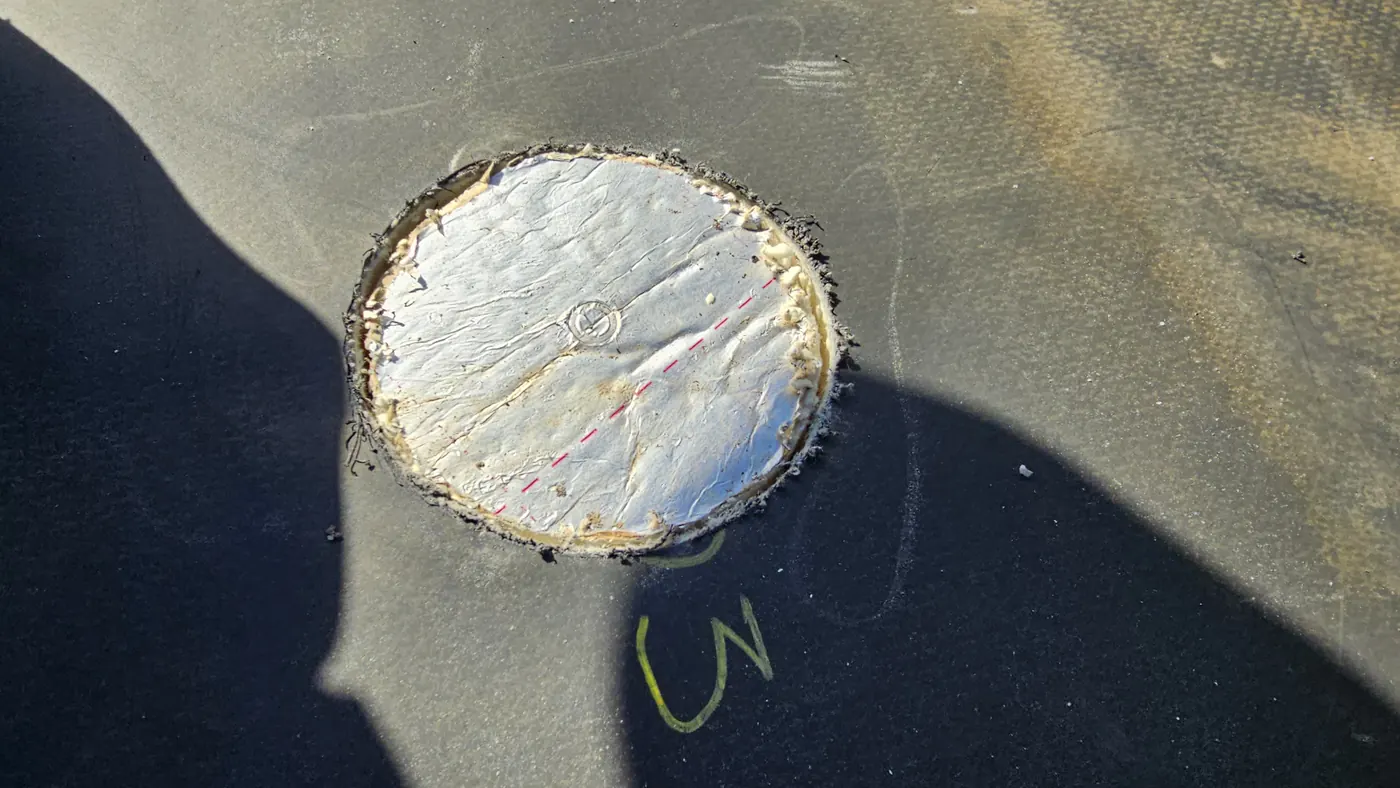
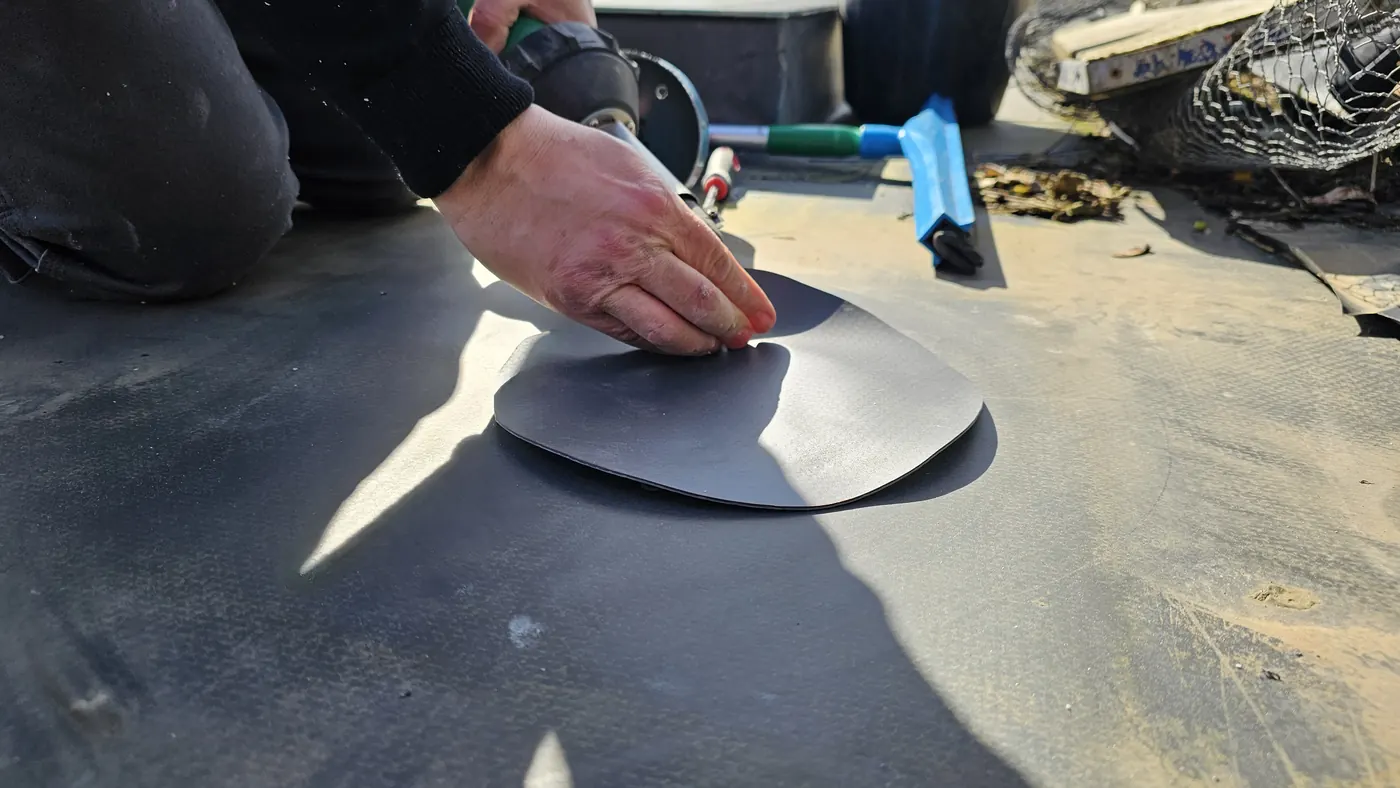
A recent retrofit installation — coring through the existing build-up, fitting the sensor, restoring the membrane lap above. Hundreds of these now silently monitoring roofs across the UK.
Straight answers
Smart roof monitoring, in plain English
What is smart roof monitoring?
Smart roof monitoring means moisture sensors are built into the roof so that water reaching the deck is detected within hours, and located to the affected zone, instead of being discovered months later when it appears on a ceiling. The sensors sit beneath the waterproofing, report continuously, and need no access to the roof to read. It is also described as permanent leak detection, integrated leak detection or smart leak detection — in specifications these terms mean the same thing.
How is that different from a one-off leak survey?
A survey is a snapshot. An engineer attends, tests the membrane electronically, and tells you the condition of the roof on the day. Monitoring is continuous: once the sensors are in, the roof reports its own condition for the rest of its life. Most buildings need both — a survey to establish that the roof is sound now, monitoring to prove it stays that way.
Can sensors be retrofitted into a roof that is already built?
Yes. Sensors are cored through the existing build-up, seated against the deck, and the membrane is reinstated over the penetration. Vector has installed hundreds of retrofit sensors on UK roofs. Retrofit is usually specified where a roof is buried under ballast, paving, a green roof or a podium landscape and opening it up to investigate would cost more than monitoring it.
Which roofs benefit most from monitoring?
Roofs where a leak is expensive to find and expensive to suffer: green and blue roofs, podium decks, inverted and ballasted roofs, CLT and mass timber structures, data centres, and any roof over a fit-out that cannot be taken out of service. On a bare, accessible roof a leak can usually be traced quickly by hand, and monitoring is harder to justify.
Do the standards require leak detection in a roof?
No standard makes it mandatory, but several point at it. BS 6229:2025 sets out the inspection and maintenance regime a flat roof needs across its life. CIRIA C817 §3.2.3 recommends that consideration be given to installing a permanent leak detection system on a warm blue roof — it does not require one. ASTM D8551 sets out how a permanently installed leak-detection system should be specified and verified. Where a client specification calls for an integrated system, those documents are the ones that define what good looks like.
How often should a flat roof be inspected?
At least twice a year. BS 6229:2025 §8.2 sets out an autumn inspection, once the leaves are down, to confirm the roof is clear and free-draining and that outlets are not blocked, and a spring inspection to find and rectify winter weather damage. Green, blue and other specialist roofs are treated separately: they should be inspected in accordance with the designer’s original inspection plan. BS 6229 is a code of practice, so it recommends rather than requires — but the twice-yearly regime is what waterproofing guarantees are conditional on in practice, and a roof with no inspection record is a roof with a contested warranty.
How does an enquiry usually start?
Most start with a drawing or a photograph. Send the roof section, the sensor layout if there is one, or a picture of the stain on the ceiling, and an independent waterproofing specialist will come back — normally within one working day — with a view on what is happening and what it would take to resolve it. There is no charge for that first review.
Answers on this page are written by Ben Hickman, Technical Director of Vector — contributing author of CIRIA C817 (Blue Roofs), contributing committee member of the BS 8102:2022 revision, and Past Chair of the Property Care Association.
Latest insights
From the technical blog
Technical Insight
Can You Find a Leak Without Removing the Green Roof?
Yes. A buried leak location survey reads the waterproofing membrane through the planting, substrate and drainage layer and plots the breach on the roof plan, so the only opening-up is about a square metre at a marked position. How it works, what it needs, and when it cannot be done.
Read →Technical Insight
Green Roof Leak Survey: What a Building Surveyor Should Specify
A building surveyor instructing a leak investigation on a green roof, podium deck or other buried membrane: the method to specify, the information to provide, the deliverables to require, and the step that is most often left out. With suggested instruction wording.
Read →Technical Insight
Green Roof Leaking After Heavy Rain: What to Do
A green roof that leaks only in heavy or prolonged rain has a defect that normal weather does not reach. What a facilities manager, asset manager or surveyor should do in the first week, what not to let a roofer do, and how the breach is found through the build-up without stripping the roof.
Read →