
Case Study — Data Centres
Install in minutes. Protect for decades.
How Vector, in partnership with Sensor Innovation, embeds permanent moisture monitoring into the roofs of large-scale data centres — turning a high-risk asset into a continuously verifiable one across its full operational life.
Discuss your next data centre roof- Sensor battery life
- 30 yr
- Operational states tracked
- 4
- Penetrations through the waterproofing
- 0
- Baseline window
- Y0–Y1
Background
The roof is the most exposed surface on a mission-critical facility.
Vector is increasingly engaged to deliver comprehensive moisture monitoring across large-scale data centre estates in UK and EU portfolios. Working alongside Sensor Innovation — the Norwegian developer of the into® control system — we provide long-term insight into the condition of the critical roof structure, supporting proactive risk management throughout the building's lifecycle.
The objective is straightforward: replace reactive repair with continuous, data-driven assurance — for the operator, the insurer, and every contractor who has to interface with the roof for the next thirty years.
The problem
Multiple disciplines, one structure.
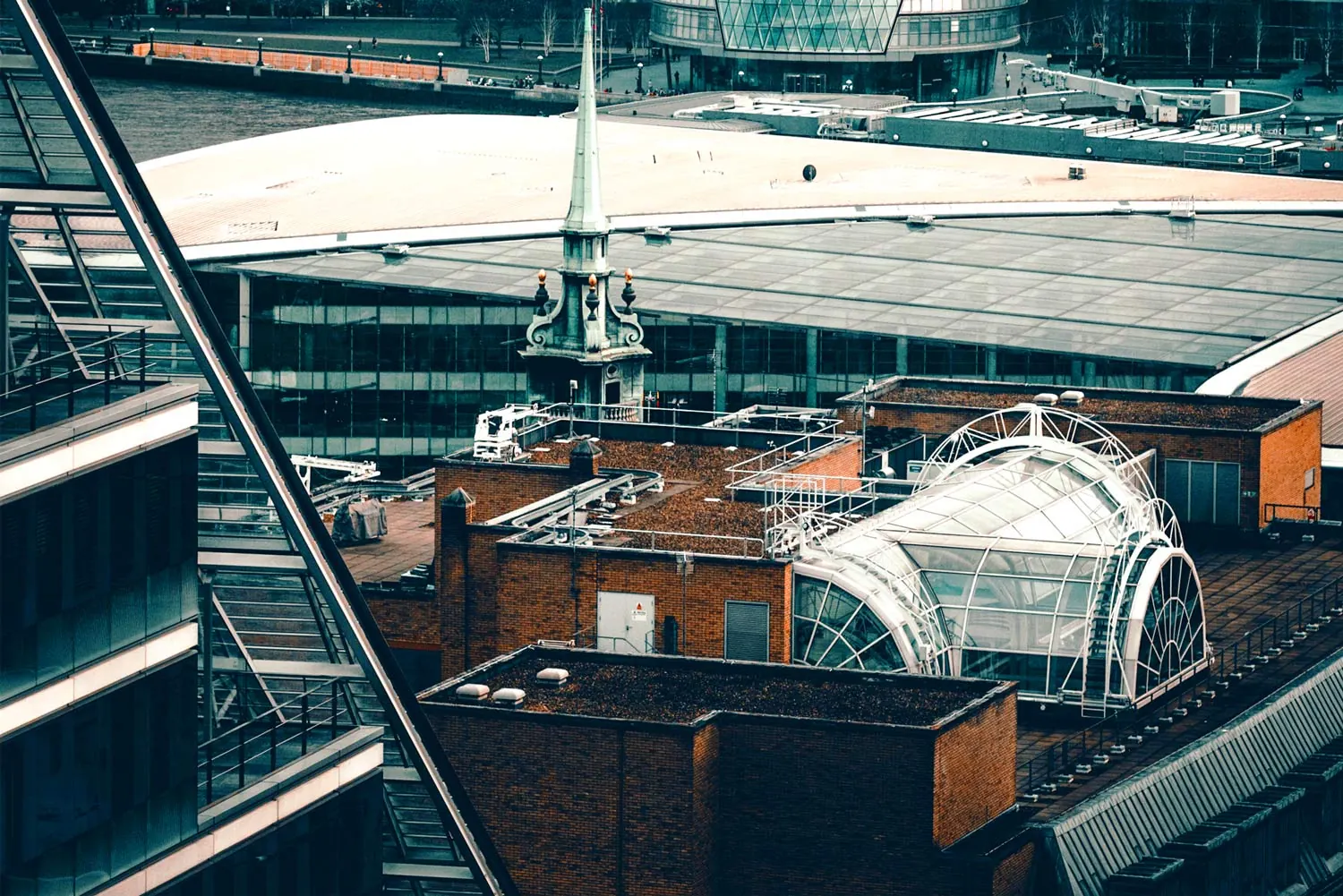
Modern data centres carry an exceptional density of technical installations. Roofs, decks and structural elements are no longer just weather protection — they are working platforms for ventilation and cooling, cable trays and power infrastructure, pipework and drainage, green or blue roof solutions, and technical walkways and service zones.
Roofing contractors deliver high-quality waterproofing at construction. But every subsequent intervention exposes that membrane to risk. Small defects accumulate silently — by the time damage is visible, remediation costs have multiplied.
The solution
Sensor-based risk mapping, designed in from day one.
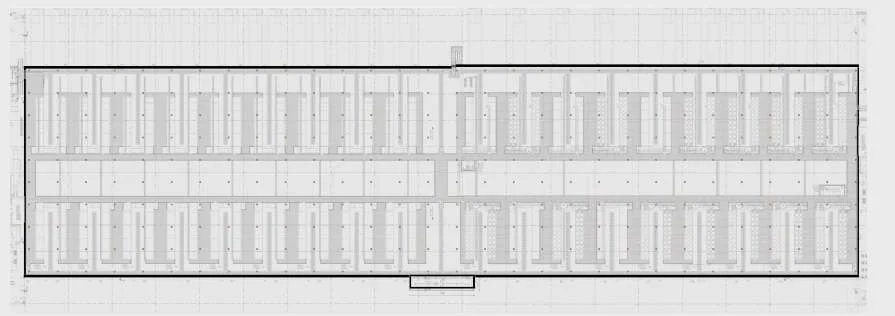
Vector is involved in early planning, well before the roof build-up is finalised. Our specialists analyse the moisture mechanics of the roof and deck construction type, critical penetrations and interfaces, load-bearing zones, thermal bridges and temperature gradients, and areas exposed to future technical modifications.
From this analysis, a sensor grid is designed and integrated into the roof structure. Coverage targets the highest-risk zones while remaining compatible with the construction methodology and installation sequencing — so monitoring is treated as part of the building's technical design, not bolted on afterwards.
Installation
Coordinated execution — without compromising the membrane.
Installation runs in lockstep with the roofing contractor, M&E and the main contractor — schedule alignment, protection of the waterproofing, quality control, sensor location documentation and verification of system functionality. Sensors are installed lay-as-you-go in new roofs, or retrofitted into existing structures, typically on the vapour control layer beneath the insulation — with zero penetrations through the waterproofing itself.
Roof gateways are mounted in weatherproof enclosures at the parapet, and the system integrates with the facility's BMS, typically via API.
Operational insight
From detection to long-term control.
Continuous monitoring reveals the moisture behaviour and microclimate of the critical roof assemblies over time. Interpretation and action are structured around four operational states:
-
Normal
Within defined safe conditions. Permanent safeguard.
-
Warning
Trend deviation. Planned investigation triggered.
-
Alert
Direct leak or compromised waterproofing.
-
Offline
Connectivity or hardware fault. Service via gateway.
During Year 0–1, data primarily reveals built-in construction moisture and visible leaks at penetrations — establishing a verified baseline. Once those sources are addressed, focus shifts to long-term watch over previously exposed zones, while the 30-year sensor batteries carry the monitoring forward without re-entry.
See it installed
Vector sensor retrofit — on site
“Installing moisture sensors offers documented benefits throughout the building's entire lifetime — far beyond the warranty period.”
Vedal is one of Norway's leading construction and property development companies, established in 1988 — specialising in complex projects for private and public clients with a strong focus on collaboration, quality and sustainability.
Conclusion
A data centre roof is never finished at handover.
Throughout the operational lifetime of the facility, the roof is continuously exposed to new installations, system upgrades, capacity expansions, maintenance and structural adaptation. Each intervention introduces potential risk. Without continuous monitoring, small defects remain undetected until significant damage has occurred.
By implementing permanent moisture monitoring, the operator establishes a framework for long-term risk control rather than reactive repair — reducing moisture-related damage, improving maintenance planning, strengthening documentation for insurers, and lowering total lifecycle cost.
Discuss your next data centre roof with Vector.
Early involvement, integrated system design, coordinated installation and long-term monitoring — reliability for the full operational life of the asset.
Talk to Vector