
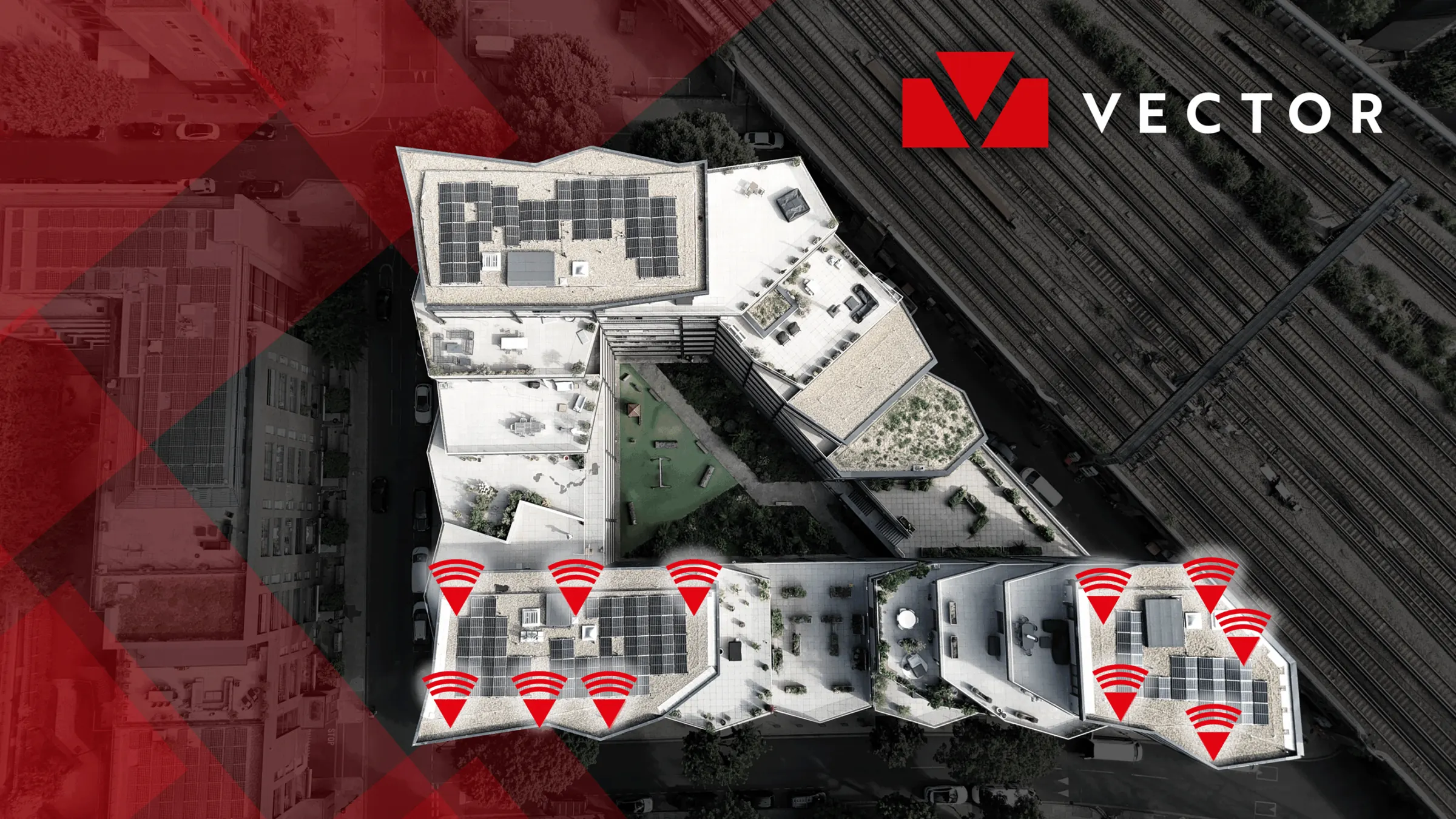
A flat roof is leaking. Water is getting into the building. Everyone can see the damage — but nobody can find the source.
This is one of the most common scenarios in commercial roofing. The water stain on the ceiling might be three metres away from the actual breach. On a complex landscape roof, traditional investigation methods are slow, destructive and unreliable.
Buried leak detection (BLD) locates the point of water ingress through a buried or concealed waterproofing membrane — without removing the layers above.
How buried leak detection works
Low-voltage electrical field mapping traces the path of moisture through a waterproofing system. Water conducts electricity; an intact membrane does not. A controlled electrical potential is applied across the membrane surface; where the membrane is breached, current flows through the moisture path into the structural deck.
The technique works through soil, ballast, paving, green roof substrates and insulation layers — without disturbing the build-up.
Why it matters on complex roofs
Modern multi-layered roof assemblies hide their problems. Water can travel laterally for metres through drainage layers, screeds or insulation before finding a route down. Visible damage bears no relation to breach location.
BLD compresses what would otherwise be weeks of speculative excavation into a single site visit. One precise location. No destructive investigation. A targeted repair instead of wholesale strip-out.
When BLD should be used
- Green and biodiverse roofs
- Blue roofs and attenuation systems
- Paved podium decks
- Ballasted flat roofs
- Inverted warm roofs
- Defect liability period disputes where the contractor and the owner disagree on cause
What BLD does not do
BLD is not a condition survey. It identifies active breaches at the time of testing. It does not predict future failures, and it does not replace planned inspection regimes.
The Vector approach
We are independent. No ties to product manufacturers. No installation contracts to protect. Our engineers have deep experience in waterproofing design, failure modes and forensic analysis — and we operate under exclusive UK access to Texplor’s electrical field technology from the Netherlands.
If you want the leak found, talk to Vector.